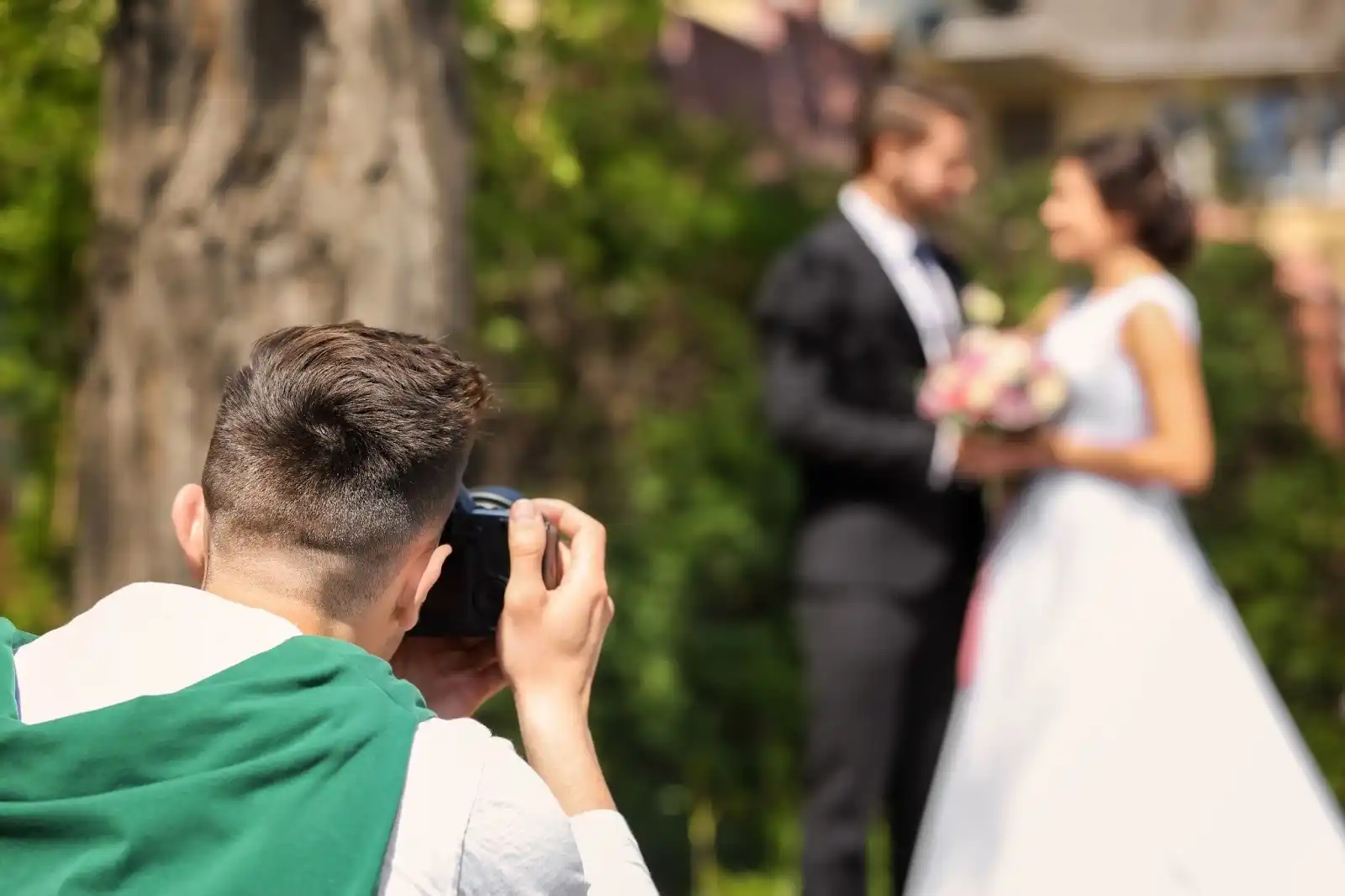
There are two photographs from every wedding. The first is the one everyone expects. The couple stands together, perfectly positioned, facing the camera, smiling the smile they have been told to smile. The light is good. The composition is clean. The image is objectively beautiful. And thirty years from now it will hang on a wall and confirm that a wedding happened and that everyone looked nice. The second photograph is the one nobody planned. It is the moment the groom turns and sees the bride walking toward him for the first time and his face does something completely involuntary. Something that no direction, no posing and no number of rehearsed expressions could have produced. His eyes fill. His chin trembles slightly. And the photographer who was watching for exactly this moment captures it in a fraction of a second before it passes and becomes only a memory.
What Candid Wedding Photos and Traditional Photography Actually Mean
Defining Traditional Wedding Photography With Clarity
Before comparing the two approaches it is worth being precise about what each actually means in professional wedding photography practice. Traditional wedding photography, sometimes called classic or formal wedding photography, is a directed approach in which the photographer takes an active role in creating images by positioning subjects, directing poses, arranging groups and controlling elements of the composition including light, background and the spatial relationship between people in the frame. The photographer is visible, present and directive throughout the shooting process. The resulting images are predictable in the best sense of that word. The couple knows what they will receive. Key moments, family groupings and formal portraits will be documented with consistency, technical precision and compositional intentionality that reflects the photographer’s craft rather than the spontaneous unfolding of the day.
Defining Candid Wedding Photography and What It Truly Involves
Candid wedding photos, also called documentary or photojournalistic wedding photography, involve the photographer working as an observer rather than a director. The photographer moves through the wedding as a largely invisible presence, watching and anticipating rather than arranging and directing. Moments are captured as they occur rather than as they are created. The resulting images reflect the actual unfolding of the day rather than a curated version of it. Most professional wedding photographers today work somewhere on the spectrum between these two pure approaches, though they tend to have a primary orientation that strongly influences the character of their work and the specific emotional quality of the final collection they deliver.
The Emotional Power of Candid Wedding Photos
Candid wedding photos have a specific emotional quality that is difficult to manufacture through any directed approach and that has made them increasingly central to how contemporary couples think about wedding photography. This quality is authenticity. And authenticity is not a style choice. It is the difference between a photograph that documents an emotion and a photograph that reproduces the visual appearance of an emotion that was requested. The human eye is extraordinarily sensitive to this difference and responds to it instantly and involuntarily every time.
Why Unplanned Moments Often Become the Most Treasured Images
The psychology of why unplanned moments resonate so deeply in wedding photography is rooted in the way human beings recognize genuine emotion. We are extraordinarily sensitive detectors of authenticity in facial expressions and body language. We recognize within milliseconds whether a smile is felt or performed, whether an embrace is genuine or staged and whether the emotion visible in a photograph is real or recreated. This sensitivity means that candid images which capture genuine emotional responses in the moment they occur register as more emotionally resonant and more personally meaningful than equivalent directed images even when the technical quality of the two photographs is identical.
How Candid Photography Captures the Day You Actually Lived
One of the most common experiences that couples report after seeing their wedding photographs is the discovery of moments they did not know were being captured. Moments they did not consciously experience during the day because the day was moving too fast, the emotion was too overwhelming or they were simply in a different part of the room. Candid wedding photos give couples their wedding day back in a way that directed photography cannot.
The Timeless Value of Traditional Wedding Photography
Why Formal Portraits Remain Essential in Every Wedding Album
Traditional wedding photography exists for genuinely important reasons that candid approaches alone cannot fully satisfy. Weddings are social events as well as emotional ones. They bring together families and friends whose relationships with the couple are important, whose presence is valued and who have traveled sometimes significant distances to be part of the day. These people deserve to be documented in photographs that are clear, flattering and compositionally intentional rather than captured only in the passing moments of a documentary approach. The formal family portrait that includes three generations is not merely a photograph.
The Reliability and Consistency That Traditional Photography Delivers
Traditional wedding photography delivers its core images with a reliability and a technical consistency that is genuinely difficult to replicate through pure documentary approaches. When a family travels from three different countries to attend a wedding, the photograph that documents their gathering is not something that can be left to chance and the hope that the documentary photographer happened to be in the right position at the right moment. It needs to be created deliberately, with everyone present, properly positioned and clearly visible in a composition that honors the significance of the gathering.
Key Differences Every Couple Should Understand Before Choosing
Time, Planning and the Wedding Day Timeline
The practical differences between candid wedding photos and traditional wedding photography extend beyond the aesthetic quality of the resulting images to the actual experience of having them taken. Traditional photography requires time. Family grouping sessions, couple portrait sessions and the various directed images that form the backbone of a traditional wedding album need to be scheduled, organized and executed within a wedding day timeline that is already under considerable pressure.
Trust, Invisibility and the Photographer Relationship
Candid photography requires a fundamentally different kind of preparation and a fundamentally different relationship with the photographer. It requires choosing a photographer whose observational instincts and aesthetic sensibility closely match the couple’s vision for their wedding images. It requires building a level of trust with the photographer that allows them to work freely without constant direction from the couple. And it requires accepting a degree of unpredictability in the final collection since candid approaches cannot guarantee specific moments or compositions the way directed approaches can.
Can You Have Both? The Case for a Blended Photography Approach
How Skilled Photographers Blend Both Styles Seamlessly
The framing of candid wedding photos versus traditional photography as a binary choice is more limiting than the actual landscape of professional wedding photography requires. The majority of experienced wedding photographers work with a blended approach that uses the appropriate technique for each type of moment rather than dogmatically applying a single methodology throughout the day. Moments that are inherently formal and require documentation including family portraits, couple portraits, wedding party images and the formal record of key ceremony moments are approached with the directorial intention of traditional photography to ensure clear, compositionally controlled results.
Communicating Your Vision to Get the Best of Both Worlds
The key to successfully combining both approaches lies in the quality of the communication between the couple and their photographer before the wedding day. A detailed conversation about which moments the couple considers non-negotiable from a traditional documentation perspective and which moments they most hope to have captured candidly gives the photographer the strategic framework they need to plan their approach, their positioning and their time allocation across the wedding day. Couples who invest in this conversation consistently report greater satisfaction with their final wedding photography collection than couples who leave these decisions entirely to the photographer’s discretion without communicating their specific priorities and preferences.
Conclusion
The choice between candid wedding photos and traditional wedding photography is ultimately a question about what you want your wedding photographs to do for you for the rest of your life. If you want a beautiful reliable visual record of the day that documents the people present and the key moments in a compositionally intentional way then traditional photography serves that need with consistency and technical excellence. If you want to feel the truth of the day every time you open the album, to be surprised by moments you forgot and moved by emotions you did not know were visible then candid photography delivers that experience in a way that no directed approach can manufacture. And if you want both which most couples genuinely do then the right photographer will give you exactly that. Choose the photographer whose work already makes you feel something before you have even met them. Because that feeling is the most reliable indicator that they see weddings the same way you do.