Travel photography is more than just snapping pictures; it’s about capturing stories, emotions, and unique perspectives that transport viewers to different places. Every photograph has the potential to convey a narrative, inviting the viewer to experience the world through your eyes. In this blog post, we will explore innovative techniques and tips that will enhance your travel photography perspective, allowing you to create stunning visuals that resonate with your audience.
Understanding Travel Photography Perspective
At its core, travel photography perspective involves the angle and point of view from which a photograph is taken. It’s not merely about what you capture, but how you capture it. A unique perspective can make ordinary scenes extraordinary, transforming a simple landscape into a breathtaking vista. This perspective not only influences the composition of your images but also shapes the story you wish to tell. Understanding how to manipulate perspective can elevate your photography, making it more engaging and memorable.
The Importance of Perspective in Storytelling
Perspective plays a crucial role in storytelling through photography. It dictates how viewers perceive the subject and the emotions conveyed. By experimenting with various angles and approaches, you can evoke different feelings. For instance, a low-angle shot can make a subject appear powerful and imposing, while a high-angle shot can evoke a sense of vulnerability. By mastering perspective, you have the ability to guide the viewer’s emotional response, making your travel photography not just a collection of images, but a journey through experiences.
Essential Techniques for Unique Perspectives
Capturing unique perspectives begins with understanding the techniques that can enhance your travel photography. The following methods can help you break away from conventional approaches and inspire creativity.
Utilizing Different Angles
One of the simplest yet most effective ways to change your perspective is by altering your angle. Instead of shooting from eye level, try crouching down or climbing up higher to gain a fresh viewpoint. Low-angle shots can emphasize the grandeur of towering structures or natural wonders, while high-angle shots can provide context and reveal the environment surrounding your subject. Experimenting with tilt and rotation can also add dynamism to your compositions. A slight tilt can create a sense of movement, drawing the viewer’s eye and adding intrigue to your images.
Incorporating Foreground Elements
Foreground elements are essential for adding depth and dimension to your photographs. By including an interesting object in the foreground, you can create a layered effect that enhances the overall composition. Look for natural frames such as branches, flowers, or rocks that can lead the viewer’s eye into the scene. This technique not only draws attention to the main subject but also provides context, making the viewer feel more immersed in the environment you’re capturing.
Experimenting with Focal Lengths
The choice of focal length can dramatically alter your perspective. Wide-angle lenses allow you to capture expansive landscapes and dramatic skies, emphasizing the vastness of your surroundings. They are perfect for creating a sense of space and depth. On the other hand, telephoto lenses can compress distance, bringing distant subjects closer and isolating them from their environment. By creatively using zoom, you can change the way your subject interacts with its surroundings, resulting in unique compositions that tell a different story.
Composition Strategies for Travel Photography
Once you’ve grasped the importance of perspective, it’s time to delve into composition strategies that can further enhance your travel photography.
Rule of Thirds and Beyond
The rule of thirds is a fundamental principle in photography composition. By dividing your frame into a three-by-three grid, you can position your subject along the grid lines or at their intersections, creating a more balanced and engaging image. However, it’s essential to remember that rules can be broken. As you gain confidence, explore alternative composition techniques such as leading lines or framing. Leading lines can guide the viewer’s eye toward the main subject, while framing can help isolate your subject against a busy background.
Symmetry and Patterns
Symmetry and patterns are visually arresting elements that can enhance the impact of your travel photography. Identifying symmetrical scenes, such as architectural structures or natural formations, allows you to create striking images that draw the viewer in. Patterns, whether found in nature or man-made environments, can add rhythm and visual interest to your compositions. Pay close attention to your surroundings and look for these elements; they can turn an ordinary scene into an extraordinary photograph.
Natural Lighting and Its Effects
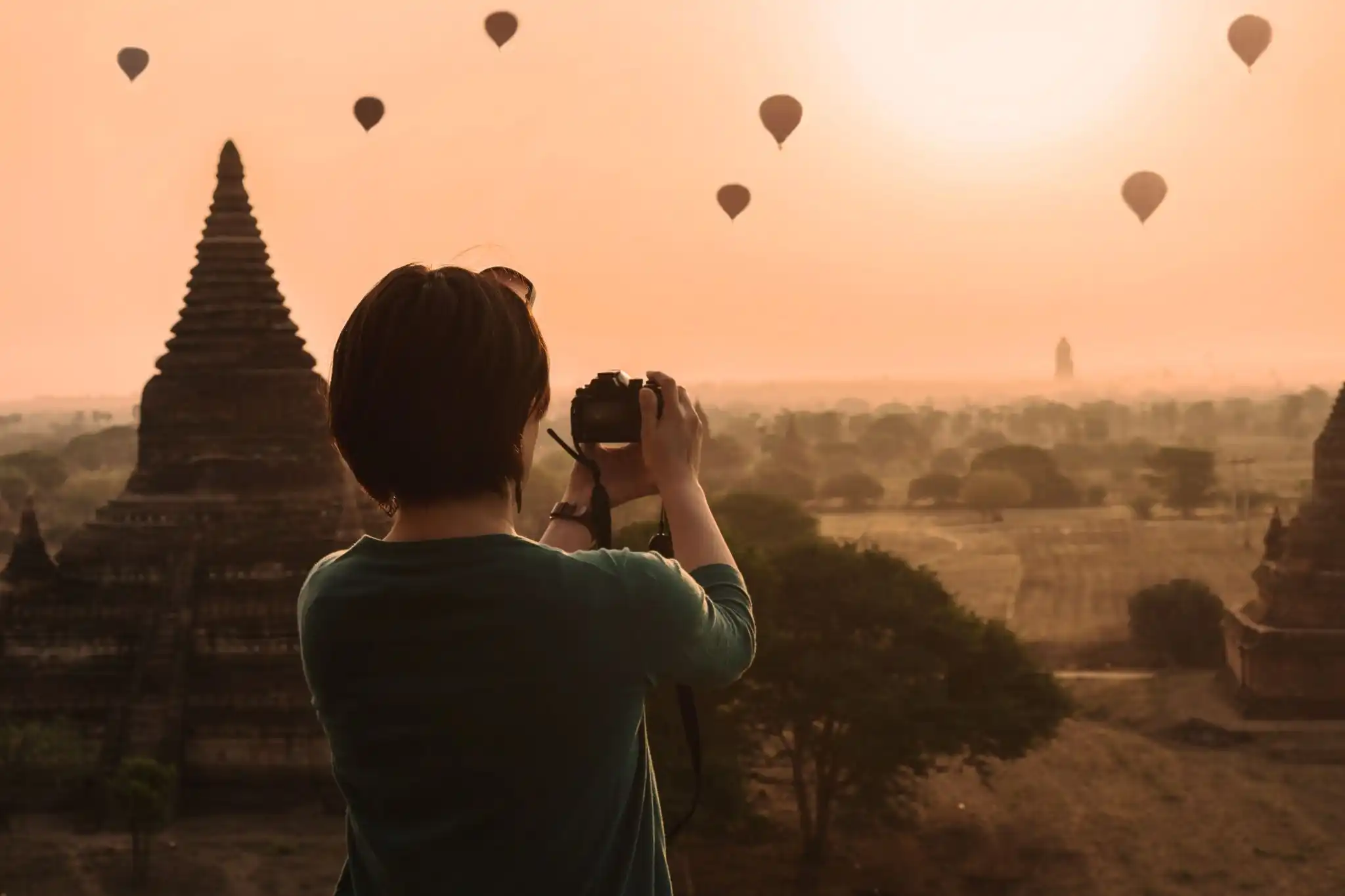
Lighting is one of the most critical aspects of photography. The quality and direction of light can dramatically affect the mood of your images. Natural light, especially during the golden hour, shortly after sunrise or before sunset, creates a soft, warm glow that enhances the beauty of your subjects. This time of day provides the perfect opportunity to capture stunning landscapes and portraits with rich colors and gentle shadows. Conversely, shooting during the blue hour, just after sunset, can create a serene atmosphere with cool tones. Understanding how to work with natural light will take your travel photography to the next level.
Post-Processing Techniques to Enhance Perspective
While capturing the perfect shot in-camera is essential, post-processing can further refine your images and enhance perspective.
Adjusting Perspective in Editing Software
Editing software offers tools to correct lens distortion and adjust perspective. If your wide-angle lens has caused distortion, you can rectify this in post-processing by straightening lines and correcting the overall perspective. Additionally, enhancing depth and dimension through techniques like dodging and burning can add drama to your images. This subtle manipulation can significantly improve the viewer’s experience, making your photographs more captivating.
Color Grading for Impact
Color grading is another powerful tool in post-processing. The colors you choose can influence the emotion conveyed in your images. Warm tones can evoke feelings of happiness and nostalgia, while cooler tones can create a sense of calm or melancholy. Experiment with different color palettes during the editing process to find the mood that resonates best with your travel narrative. Thoughtful color grading can elevate your photography, making it not just a visual experience but an emotional one as well.
Case Studies of Successful Travel Photographers
To inspire your journey in travel photography, let’s look at a few renowned photographers who have mastered the art of capturing unique perspectives. Their work showcases how perspective can transform ordinary scenes into extraordinary narratives.
One notable photographer is Steve McCurry, best known for his iconic “Afghan Girl” portrait. McCurry’s ability to capture raw emotion through unique perspectives has made his work timeless. He often uses natural light and pays close attention to the interplay between foreground and background, creating depth in his images. Another example is Chris Burkard, known for his breathtaking landscapes and adventurous spirit. His use of dramatic angles and composition tells the story of exploration and the beauty of the wild. By studying these photographers, you can glean valuable insights into how perspective shapes their visual storytelling.
Practical Tips for Capturing Unique Perspectives
As you venture into the world of travel photography, keep the following practical tips in mind to ensure you capture unique perspectives. Before you head out, prepare your equipment, ensuring you have the right lenses, filters, and a sturdy tripod. Being patient and observant is key; sometimes, the best shots come from waiting for the right moment. Don’t hesitate to get creative, try new angles, explore unusual locations, and don’t be afraid to step outside your comfort zone. The more you experiment, the more you’ll find your unique photographic voice.
Conclusion
In the realm of travel photography, capturing unique perspectives is essential to tell compelling stories and evoke emotions. By understanding and experimenting with perspective, composition, lighting, and post-processing techniques, you can elevate your photography to new heights. Remember, the journey of a travel photographer is ongoing. Continue to learn, explore, and push your creative boundaries. Your unique perspective is what will set your images apart and allow your audience to experience the world through your lens.
FAQs
What is the best time of day for travel photography?
The golden hour, shortly after sunrise or before sunset, offers the best natural lighting for capturing stunning images. The soft, warm light enhances colors and reduces harsh shadows.
How can I improve my composition?
Practice the rule of thirds by positioning your subject off-center. Explore alternative composition techniques like leading lines and framing to create more engaging images.
What equipment do I need for travel photography?
A DSLR or mirrorless camera is ideal, along with a range of lenses. A sturdy tripod and filters can also enhance your photography experience.
How important is post-processing?
Post-processing is crucial for refining your images. It allows you to correct imperfections, enhance colors, and adjust perspective, ultimately elevating your photography.
Can I achieve unique perspectives with a smartphone?
Absolutely! Smartphones have advanced significantly in their camera capabilities. Experiment with angles, lighting, and editing apps to capture stunning travel photographs.